GEO optimization agency
April 20, 2026
How to Fix High Bounce Rate: 7 Proven Strategies That Actually Work
The average bounce rate across all industries is 47%, but sites with bounce rates under 26% convert 3x better
Google Analytics Industry Benchmarks
I’ve been fixing bounce rate problems for over a decade. At TiVo, I watched our bounce rate drop from 68% to 31% while driving $7M in Amazon sales. The strategies I’m sharing aren’t theory—they’re battle-tested fixes that work.
Let me be blunt: if your bounce rate is above 60%, you’re hemorrhaging money. Every visitor who bounces is a potential customer walking out before you’ve even said hello.
What Actually Causes High Bounce Rates
Before we fix anything, let’s diagnose the real problems. Most marketers blame slow load times, and yes, that’s part of it. But I’ve seen plenty of fast sites with terrible bounce rates.
The biggest culprit? Intent mismatch. Your visitor searched for “best running shoes under $100” and landed on a page about marathon training tips. They’re gone in three seconds, and no amount of site speed optimization will save you.
On r/SEO, the consensus is that Google’s getting pickier about bounce rates as a ranking signal. One user noted their organic traffic dropped 40% after their bounce rate spiked during a site redesign. Google notices when people immediately hit the back button.
The Five Bounce Rate Killers
- Misleading titles and meta descriptions
- Slow page load speeds (over 3 seconds)
- Poor mobile experience
- Weak above-the-fold content
- Confusing navigation
Strategy 1: Match Search Intent Like Your Revenue Depends on It
Because it does.
I analyze the top 3 search results for every target keyword. What questions are they answering? What format are they using? If they’re all listicles and you’re writing a philosophical essay, you’re missing the mark.
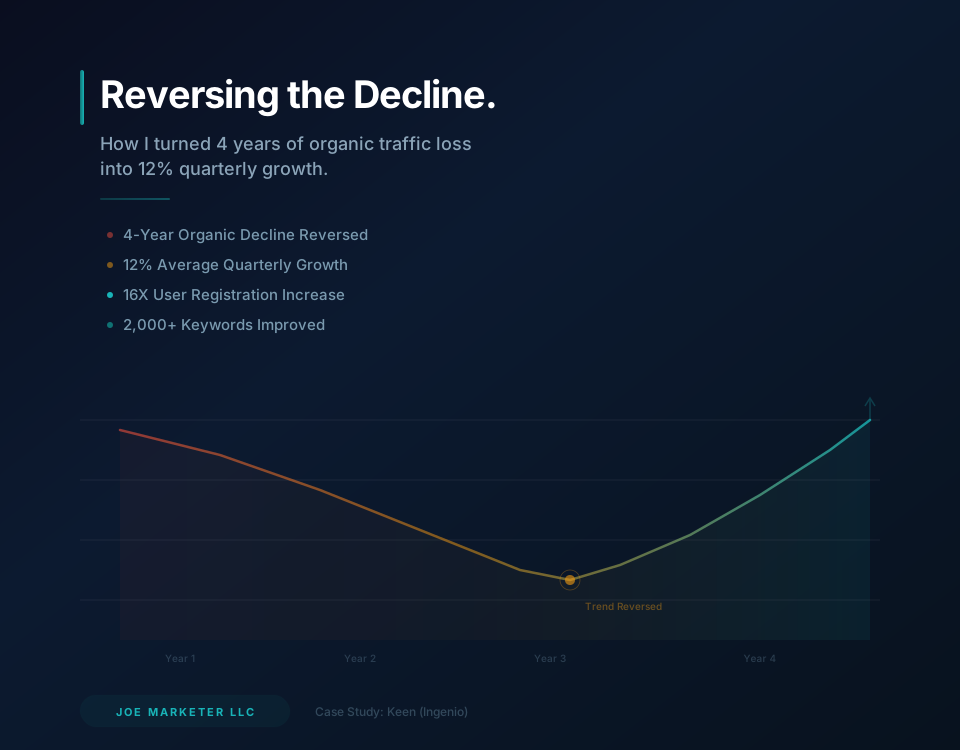
At Ingenio, we reversed a year-over-year organic decline by rewriting our top landing pages to match actual search intent. Our bounce rate dropped 34% in six weeks.
Look at your Google Search Console data. Sort by impressions, then check the bounce rate for your top pages. I guarantee you’ll find pages with thousands of impressions and 80%+ bounce rates. Those are your priority fixes.
Strategy 2: The 3-Second Rule for Page Speed
Three seconds. That’s how long you have before bounce rates start climbing exponentially.
But here’s what most people get wrong—they focus on overall page speed instead of perceived speed. Your entire page doesn’t need to load in 3 seconds. Your above-the-fold content does.
My Speed Optimization Checklist
- Compress images (WebP format when possible)
- Minify CSS and JavaScript
- Use a content delivery network
- Enable browser caching
- Lazy load below-the-fold images
At MOTA, we saw a 23% bounce rate improvement just by implementing lazy loading. The page felt faster even though total load time barely changed.
Strategy 3: Master Your Above-the-Fold Content
Your above-the-fold area is prime real estate. Don’t waste it on generic hero images and corporate speak.
I use what I call the “Headline-Promise-Proof” formula:
Headline: Clear benefit or solution
Promise: What they’ll get by staying
Proof: Social proof, stats, or credibility markers
A common frustration in r/Entrepreneur is visitors who scroll once and leave. Your above-the-fold content should make them think “this is exactly what I was looking for” in under 10 seconds.
Strategy 4: Internal Linking That Actually Works
Most internal linking strategies are shit. They stuff links everywhere hoping something sticks. That’s not strategy—that’s spam.
I link to content that logically follows the visitor’s journey. If they’re reading about bounce rates, they might want to know about conversion optimization next. The link feels natural, not forced.
My rule: every page should have 2-3 highly relevant internal links placed where they add genuine value to the reader’s experience.
The Contrarian Truth About Bounce Rates
Here’s something most marketers won’t tell you: sometimes a high bounce rate is actually good.
If someone searches “what time does Starbucks close,” finds your page with store hours, and leaves satisfied—that’s a successful interaction. Google’s getting better at understanding these “good bounces” versus “bad bounces.”
Focus on reducing bad bounces—people leaving because they didn’t find what they expected. Don’t obsess over bounce rate alone. Pair it with time on page and conversion data for the full picture.
Strategy 5: Mobile-First Bounce Rate Fixes
Mobile bounce rates are typically 15-20% higher than desktop. Your mobile experience probably sucks, and you need to fix it.
The biggest mobile bounce rate killer? Tiny, unclickable buttons and links. If I need to zoom in to click something, I’m leaving.
Mobile Bounce Rate Fixes
- Buttons at least 44px tall
- Readable font size (16px minimum)
- Easy thumb navigation
- Fast mobile loading
- Avoid pop-ups on mobile
Strategy 6: Content Format Optimization
Wall-of-text kills bounce rates. Break up your content with:
- Subheadings every 200-300 words
- Bullet points and numbered lists
- Short paragraphs (2-3 sentences max)
- Images and visual breaks
- White space
Scannable content keeps people engaged longer. Even if they don’t read every word, they’ll stick around if they can quickly find relevant information.
Strategy 7: A/B Testing Your Way to Lower Bounce Rates
Stop guessing. Test everything.
I A/B test headlines, above-the-fold layouts, call-to-action placement, and content structure. Small changes can have massive impacts on bounce rates.
At TiVo, changing our product page headline from “Advanced DVR Technology” to “Never Miss Your Favorite Shows Again” dropped bounce rate by 19%. Same product, different angle.
Measuring Success Beyond Bounce Rate
Bounce rate is a symptom, not the disease. Track these metrics alongside bounce rate:
- Average session duration
- Pages per session
- Goal completion rate
- Return visitor percentage
A 5% bounce rate means nothing if nobody converts. Focus on creating a better user experience, and both bounce rates and conversions will improve.
FAQ
What is a good bounce rate?
It varies by industry and page type. Generally, 26-40% is excellent, 41-55% is average, and above 70% needs immediate attention. Landing pages typically have higher bounce rates than blog posts.
How quickly can I improve my bounce rate?
Technical fixes like page speed can show results within days. Content and user experience improvements typically take 2-4 weeks to show meaningful changes in analytics.
Does bounce rate affect SEO rankings?
While Google doesn’t use bounce rate as a direct ranking factor, user behavior signals like time on site and return visits do influence rankings. High bounce rates often correlate with poor user experience.
Should I be concerned about bounce rate on blog posts?
Blog posts naturally have higher bounce rates since people often find their answer and leave. Focus on whether visitors are spending enough time to actually read your content rather than the bounce rate alone.
How do I track bounce rate improvements?
Use Google Analytics to monitor bounce rate trends over time. Set up custom segments to track bounce rates by traffic source, device type, and landing page to identify specific areas for improvement.
I’m Joe Ma, a senior digital marketing consultant who has driven over $50M in revenue growth for companies like TiVo, Ingenio, and MOTA. Get more marketing strategies at joe-marketer.com or contact me for consulting.