Every few decades, a new technology appears that promises to change the world. In the 1990s, it was the internet. Today, it is Artificial Intelligence (AI). Stocks are soaring, valuations are defying gravity, and investors are asking the same terrified question: “Is this sustainable?”
When the market feels irrational, smart investors turn to Howard Marks. The co-founder of Oaktree Capital is famous for his memos that cut through the noise with historical wisdom rather than hot takes. In his recent memo, appropriately titled “Is It a Bubble?”, Marks tackles the Howard Marks AI bubble question head-on. His thesis isn’t just a simple “yes” or “no”—it’s a warning that we are likely in a specific kind of bubble that could change the world while still destroying your wealth if you aren’t careful.
The Anatomy of a Mania
To understand if we are in trouble, we first have to agree on what a bubble actually is. According to Marks, signs of a stock market bubble are rarely about the technology itself. They are about psychology.
Marks argues that bubbles follow a predictable script. A new innovation arrives and worms its way into the public imagination. Early investors make a fortune, which triggers the most dangerous financial emotion of all: envy. As Marks notes, “prudence and natural risk aversion are no match for the dream of getting rich.”
When investors stop asking “Is this asset worth the price?” and start asking “Will the price go up?”, the bubble has formed. The current AI narrative, where companies with no products are raising billions of dollars, fits this historical pattern of “irrational exuberance” perfectly.
The "Inflection Bubble" Theory
However, not all bubbles are created equal. Marks introduces a fascinating distinction between “Mean-reversion Bubbles” and “Inflection Bubbles.”
Mean-reversion Bubbles are based on fads or financial engineering that offers no societal progress. Think of the 2008 subprime mortgage crisis. When these pop, the world goes back to normal, and the money is simply gone.
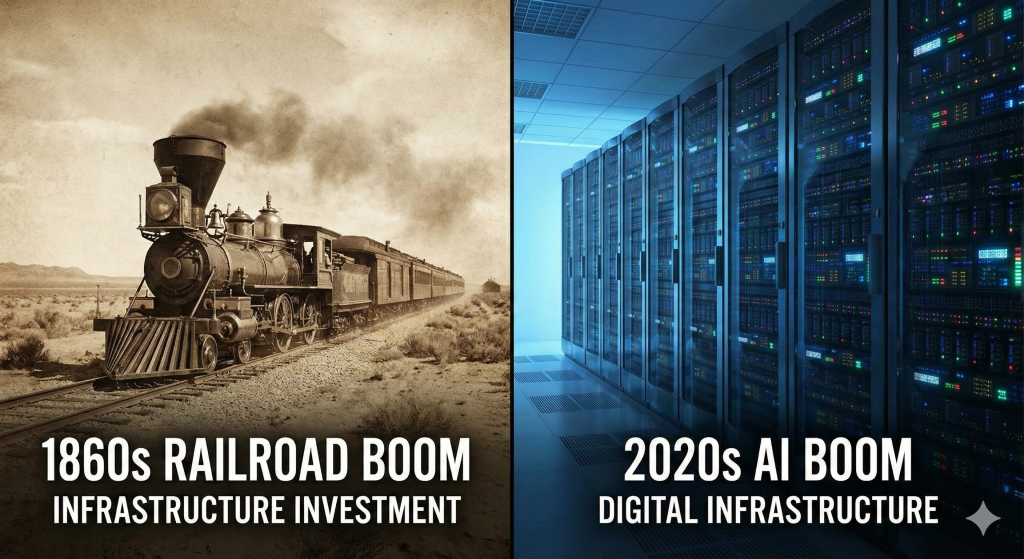
Inflection Bubbles are different. These are speculative manias built around genuine technological revolutions, like the railroads in the 1860s or the internet in 1999.
Marks suggests that AI is likely an Inflection Bubble. The technology is real, and it will likely revolutionize the economy. But here is the catch: just because the technology succeeds doesn’t mean the current stock prices are justified. Many dot-com companies went bankrupt even though the internet did end up changing the world.
The Red Flags: Circular Financing and Hype
If AI is the real deal, why should we worry? Marks points to specific “financing gymnastics” that suggest we are entering dangerous territory.
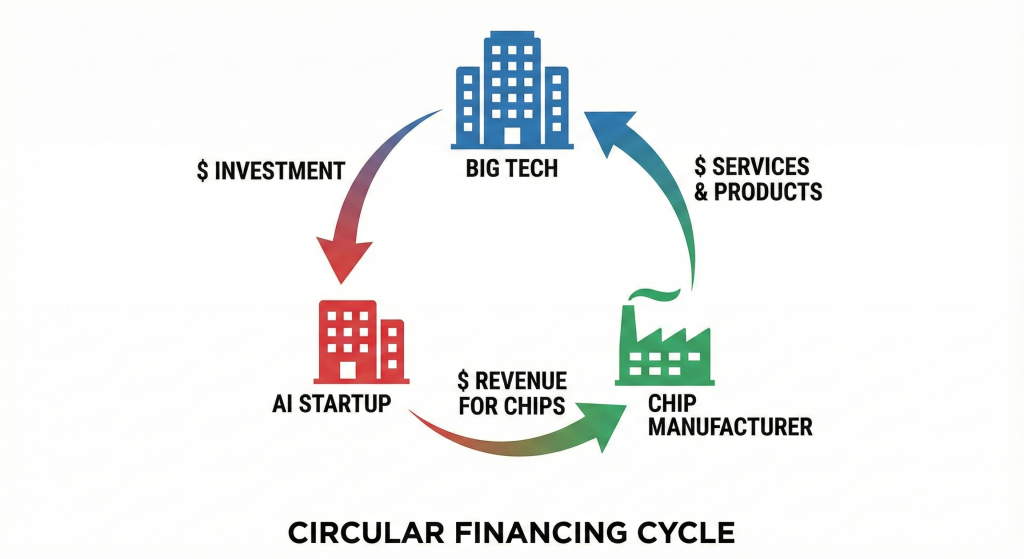
Currently, we are seeing circular financing, where major tech giants invest billions into AI startups, and those startups immediately use that cash to buy chips or cloud services back from the tech giants. It creates an illusion of massive revenue growth that may not be sustainable.
Furthermore, we are seeing massive “Capex” (capital expenditure) spending that far outpaces actual revenue. Marks compares this to the telecom boom of the 2000s, where companies laid miles of fiber optic cable that wouldn’t be fully used for years. The infrastructure is being built, but the profits to pay for it are still theoretical.
The Verdict: Should You Sell?
So, what is the Oaktree Capital market outlook 2025? Marks avoids giving a specific “sell everything” signal, but his message is clear: Caution is required.
He reminds us that being early to a bubble popping is indistinguishable from being wrong. You can lose money betting against a bubble just as easily as you can betting on it. The key takeaway is to avoid “FOMO” (Fear Of Missing Out).
Investors should focus on companies with tangible earnings and sustainable business models, rather than “concept stocks” priced for a limitless future. As Marks wisely notes, the future might be bright for AI, but “history can impose limits on awe.”
Conclusion
Howard Marks’ memo serves as a crucial reality check. We are likely living through a major technological shift, but that does not immune us from the laws of financial gravity. By understanding the difference between an inflection bubble vs mean reversion, you can appreciate the tech without overpaying for the hype.
Don’t let envy drive your investment decisions. Take a close look at your portfolio today. Are you holding assets because you believe in their long-term value, or because you’re afraid of missing the party? If it’s the latter, it might be time to take some chips off the table.