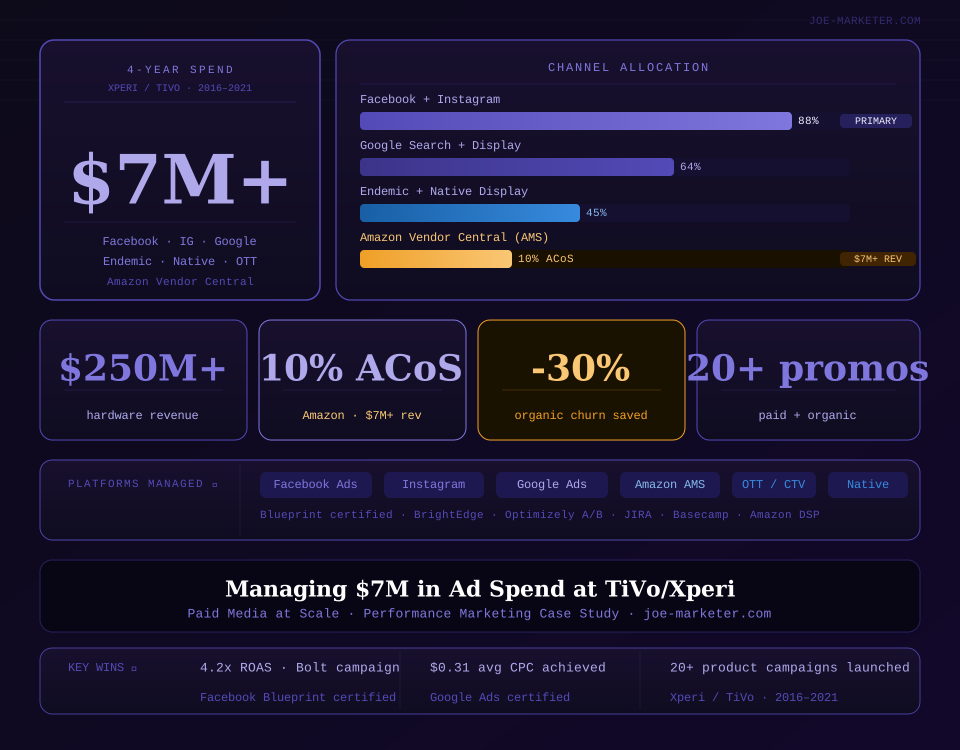
Managing Millions in Ad Spend at TiVo: Lessons in Performance Marketing
March 15, 2026
how to hire digital marketing consultant
March 20, 2026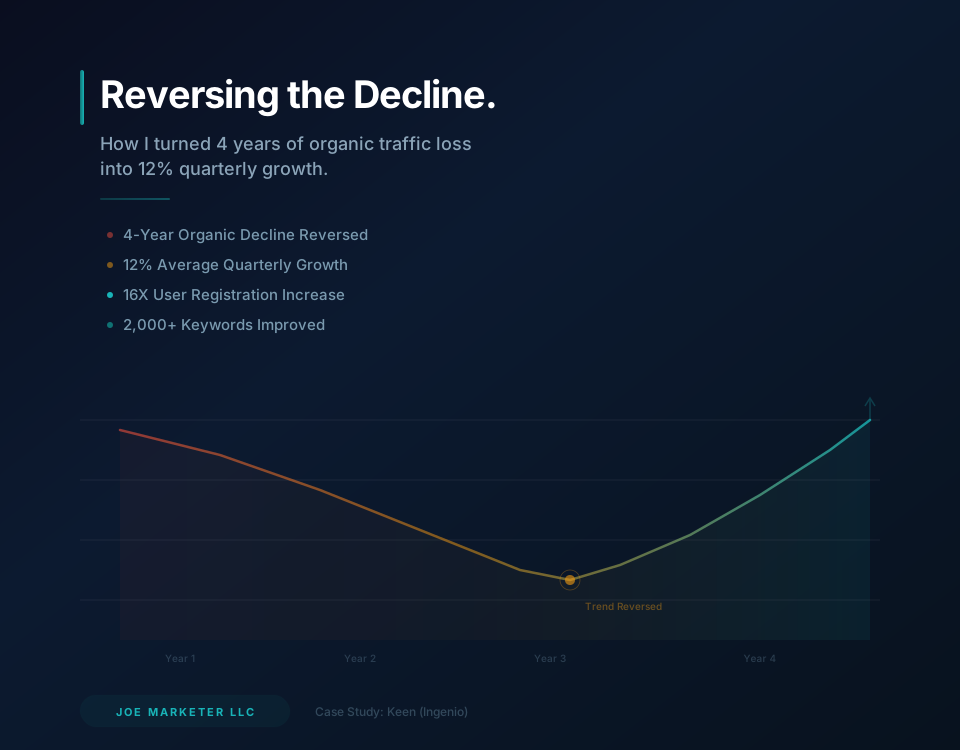
How I Reversed a 4-Year Organic Traffic Decline for a $100M+ Online Marketplace
By Joe Ma | Joe Marketer LLC | March 2026
I’m going to tell you a story about walking into a dumpster fire and walking out with a garden.
Not a metaphorical garden. An actual, measurable, “holy crap the chart goes up now” reversal of a multi-year organic traffic nosedive. The kind of turnaround that makes your VP of Marketing suddenly remember your name in the all-hands meeting.
But first, some context. Because context is everything when someone tells you they “fixed” a company’s SEO.
The Situation: Everything Was on Fire (Quietly)
In March 2021, I joined Ingenio as Senior SEO Marketing Manager. If you don’t recognize the parent company name, you definitely know the product. Keen.com is one of the largest online psychic advisor marketplaces in the world. Think of it as the Uber of spiritual guidance. Millions of users, hundreds of advisors, and a marketplace model that had been printing money for over two decades.
Here’s the problem nobody wanted to say out loud: organic traffic had been declining year over year for roughly four consecutive years.
Not a dip. Not a seasonal fluctuation. A slow, consistent, compounding bleed that was eating into the company’s most profitable acquisition channel. In a business where every organic visit has the potential to convert into a paid psychic session, that declining trendline was basically watching revenue evaporate in real time.
The causes? Pick your poison:
- Accumulated technical debt that hadn’t been addressed since the Obama administration. Crawl errors, broken internal links, orphaned pages, redirect chains that looked like a drunk spider built them.
- Content that had gone stale. Pages untouched for years, sitting there like expired milk in the fridge. Technically present, functionally useless.
- Zero schema markup. Google increasingly rewards structured data with rich snippets and enhanced SERP features. Without it, the site was essentially invisible to anything beyond basic blue links.
- No cohesive keyword strategy. Content was being published, but without a systematic approach to targeting search intent. The SEO equivalent of throwing spaghetti at the wall, except nobody was even in the kitchen.
And here’s the part that really stung. The site had massive domain authority. We’re talking about a brand with 20+ years of backlink equity, millions of indexed pages, and genuine topical authority in a niche that gets searched hundreds of thousands of times per month. The foundation was incredible. The execution was… let’s call it “undermanaged.”
What I Actually Did (No Buzzwords, Just the Work)
I didn’t come in swinging with some 47-slide strategy deck full of industry jargon. That’s consultant theater and everyone knows it. Instead, I spent my first 30 days doing the boring stuff that actually matters.
Phase 1: The Audit Nobody Wanted to See
First thing I did was run a full technical SEO audit. Screaming Frog, Google Search Console deep-dive, BrightEdge analytics, the whole toolkit. What I found was simultaneously depressing and exciting. Depressing because the issues were extensive. Exciting because almost all of them were fixable.
The crawl audit alone identified thousands of 404 errors, redirect chains up to 6 hops deep, pages with duplicate title tags, and entire site sections that Google couldn’t even reach. Someone had set restrictive robots.txt rules years ago and just… forgot about them. Classic stuff. The kind of SEO neglect that accumulates slowly until one day your traffic chart looks like a ski slope.
Phase 2: Stop the Bleeding
Before you can grow, you have to stop dying. Priority number one was eliminating the factors actively suppressing rankings.
I cleaned up the technical foundation. Fixed crawl errors, consolidated redirect chains, updated the XML sitemap, restructured the internal linking architecture so Google could actually discover and crawl priority pages efficiently. None of this is sexy. None of it makes for a good conference talk. But it works.
I also conducted a content audit across the site’s highest-traffic landing pages. Pages that used to rank on page one but had slipped to page two or three. That’s the SEO equivalent of purgatory; you’re close enough to see the traffic but too far to actually get it. For each of those pages, I rebuilt the on-page optimization. Updated title tags, rewrote meta descriptions, refreshed the body content with current information, and added proper header hierarchy that search engines could parse cleanly.
Phase 3: Build the Engine
Once the bleeding stopped, I shifted to offense.
I built out a systematic content strategy targeting the full funnel. Broad awareness queries like “what to expect from a psychic reading” all the way down to high-intent transactional searches like “best psychic advisors for love readings.” Each piece of content had a specific keyword target, a specific search intent mapping, and a specific conversion path.
Here’s where it got interesting. I developed a lead capture optimization framework that fundamentally changed how we converted organic visitors into registered users. Instead of dumping every visitor onto a generic landing page and hoping for the best, I created intent-specific conversion paths. Someone searching for “tarot card meanings” got a different experience than someone searching for “talk to a psychic now.” Same site, different journey, dramatically different conversion rates.
The result? A 16X increase in user registrations from organic traffic. That’s not a typo. Sixteen times.
Phase 4: Compound the Gains
With the foundation clean and the content engine running, the math started working in our favor. Every month built on the previous month’s gains. New content drove new rankings. Better rankings drove more traffic. More traffic drove more user signals. Better user signals drove better rankings. The flywheel was spinning.
I managed this across the full SEO stack: technical SEO, on-page optimization, content strategy, user experience optimization, and analytics. I was in Google Search Console every morning the way some people check their stock portfolio. Impressions trends, click-through rates, index coverage issues, manual action flags. All of it. Every day.
The Numbers (Because Opinions Are Cheap, Data Isn’t)
Here’s what four years of consistent execution produced:
- Reversed a multi-year organic traffic decline. The trendline went from consistently down to consistently up. That alone justified the investment.
- 12% average quarterly organic growth. Compounded over multiple quarters, that adds up fast. 12% quarter over quarter means roughly 50%+ year over year growth once you factor in compounding.
- 16X increase in user registrations from organic channels via the lead capture framework. This wasn’t just traffic growth, it was conversion growth layered on top of traffic growth. The multiplicative effect was massive.
- Improved keyword rankings across 2,000+ target keywords. Not vanity keywords. Revenue-driving keywords with real search volume and real commercial intent.
- Reduced crawl errors by 85%+ in the first six months, which directly contributed to Google’s ability to index and rank the full content library.
What I Learned (The Stuff Nobody Puts in Case Studies)
Here’s the honest part that most SEO case studies leave out. Most of this wasn’t glamorous. There was no single genius move. No secret weapon. No magic algorithm hack.
It was showing up every day and doing the fundamentals at a high level, consistently, for four years. Fixing technical issues. Writing better content. Optimizing conversion paths. Analyzing data. Adjusting the strategy based on what the data actually said, not what I hoped it would say.
The hardest part wasn’t the SEO itself. It was the internal communication. Try explaining to stakeholders why organic growth takes time, why you can’t just “turn on SEO” like a paid media campaign, and why investing in content today pays dividends six months from now. If you’ve ever tried to explain compounding to someone who wants results by Thursday, you know exactly what I mean.
The second hardest part was patience. When you’re rebuilding organic traffic for a site that’s been declining for years, the first few months feel like you’re screaming into the void. You’re making changes, fixing things, publishing content… and the traffic chart barely moves. Then one day it does. And then it doesn’t stop.
That’s the beauty of SEO when it’s done right. It compounds. Unlike paid media, where the second you stop spending the traffic disappears, organic traffic builds equity. Every piece of content, every technical fix, every earned backlink is an asset that keeps paying dividends long after the initial work is done.
Why This Matters for Your Business
I’m not sharing this to brag. Okay, maybe a little. But mostly I’m sharing it because this pattern (declining organic traffic, accumulated technical debt, stale content, no structured strategy) is absurdly common. I’ve seen it at every company I’ve worked with, from consumer electronics giants to scrappy ecommerce startups.
The good news? It’s fixable. Almost always. If your site has domain authority and a history of organic traffic, the foundation is there. You just need someone who’s done this before, knows what to prioritize, and has the patience to execute the boring stuff consistently.
That’s what we do at Joe Marketer LLC. No buzzwords, no 12-month contracts, no junior account managers who Google your questions while you’re on the call. Just senior-level strategy applied directly to your business by someone who’s actually reversed organic declines at scale.
If your organic traffic chart looks like it’s headed the wrong direction, let’s talk about it. The first conversation is free. We’ll pull your data, tell you what’s actually happening, and give you a clear roadmap. Whether you work with us or not.
Joe Ma is the founder of Joe Marketer LLC, a boutique digital marketing consultancy based in Folsom, California. With 15+ years of experience managing SEO and paid media for brands including TiVo (Xperi), Keen (Ingenio), and national ecommerce companies, he specializes in organic growth strategy, GEO (Generative Engine Optimization), and paid media management for SMB through enterprise brands. Book a free strategy session →