SEO & GEO Strategy: How I Build Organic Growth Engines That Actually Work
TL;DR
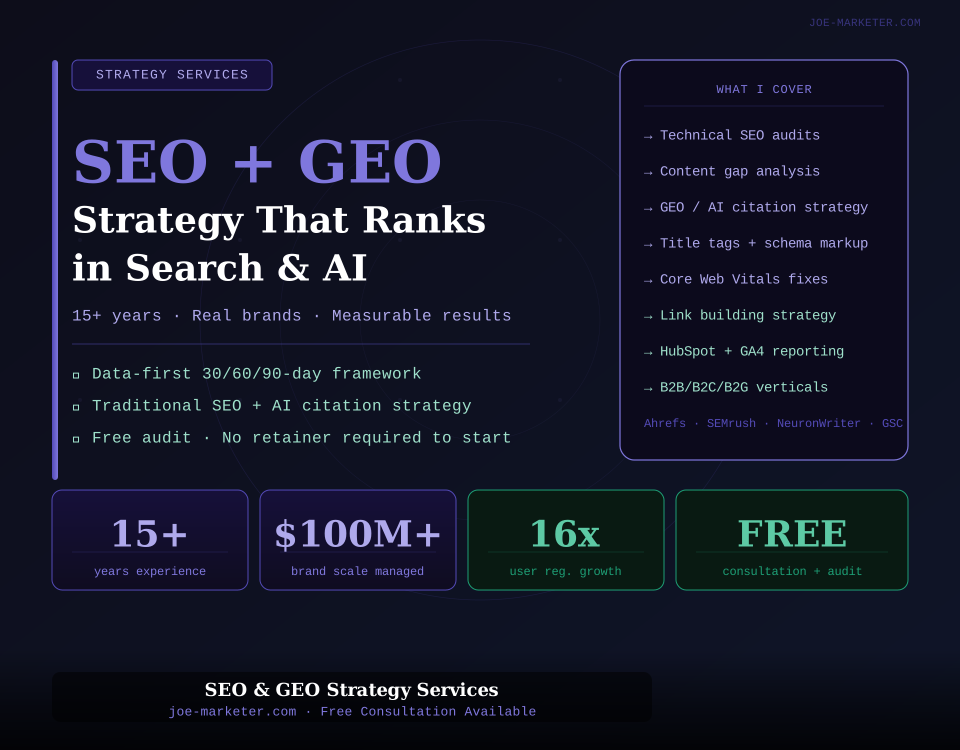
I’m Joe — a senior digital marketing strategist with 15+ years of experience building organic search strategies for brands ranging from nine-figure ecommerce companies to B2B franchise networks. My approach combines traditional SEO with Generative Engine Optimization (GEO) to ensure your content ranks in search results AND gets cited in AI-generated responses. I use a data-first 30/60/90-day framework: Month 1 is quick wins (title tags, schema, technical fixes), Month 2 is content gap analysis and page optimization, Month 3 is scaled production and link building. Below you’ll find real case studies, my exact process, and the tools I use. If you want to talk specifics, book a free consultation.Why SEO Still Matters (And Why GEO Matters More)
I’m going to be direct with you. If someone told you SEO is dead, they either don’t understand the data or they’re trying to sell you something. Organic search still drives the majority of website traffic for most businesses. That hasn’t changed. What has changed is how people interact with search results. Between 25-40% of informational queries now trigger AI-generated summaries at the top of the page. Users are getting answers without clicking through. I see this in real client data every month. One of my current engagements — a nine-figure hair care brand — was showing impression growth in Google Search Console while actual clicks were declining. More visibility, fewer visitors. That’s not a ranking problem. That’s a content strategy problem. My approach addresses both the traditional ranking game and the new reality of AI-powered search. I call the combined discipline SEO + GEO, and it’s the foundation of every engagement I take on. Read my full breakdown: What Is GEO? Why Generative Engine Optimization Changes EverythingReal Work. Real Brands. Real Results.
I don’t do hypothetical case studies. Everything below is drawn from actual engagements with real companies. Some details are anonymized per client agreements, but the strategies, tactics, and outcomes are 100% real.Case Study: $100M+ Ecommerce Hair Care Brand — Full SEO Turnaround
The situation: A major DTC hair care brand was investing heavily in content production but watching organic traffic decline. They brought me on to diagnose the problem and build a recovery strategy. What I found: Their Google Search Console data revealed a textbook case of the “impressions up, clicks down” problem. The brand’s organic footprint was 70%+ branded traffic — meaning almost all organic visitors were people who already knew the brand name. Non-branded discovery (new customer acquisition through organic search) was virtually nonexistent for competitive commercial terms. On top of that, their mobile Core Web Vitals were failing across multiple metrics, their title tags followed a rigid template that was killing click-through rates, and their product pages had zero structured data markup despite having 200+ product URLs. What I did: I built and executed a 30/60/90-day strategy: Month 1 — Stop the Bleeding: Rewrote title tags and meta descriptions for the top 50 pages by impressions, targeting CTR improvement on pages already ranking. Audited every product page and top blog post for conversion path clarity — several high-traffic pages had broken CTAs linking to out-of-stock products. Documented the full schema implementation plan for the dev team (Product, Article, FAQPage, Organization schemas). Month 2 — Build the Foundation: Conducted a comprehensive content gap analysis using Ahrefs and SEMrush, identifying 30+ high-intent non-branded keywords where the brand had zero coverage. Built detailed content briefs for each gap. Restructured product pages from basic spec sheets to rich, conversion-optimized pages with ingredient breakdowns, benefit explanations, comparison positioning, and structured review data. Initiated Core Web Vitals sprint with the engineering team — image optimization, deferred JavaScript, layout shift reduction. Month 3 — Scale and Measure: First batch of new content from Month 2 briefs went live and started indexing. Established weekly ranking, traffic, and CTR tracking dashboards. Initiated outreach for editorial links using the new content as link-worthy assets. Built the monthly reporting framework tracking branded vs. non-branded traffic segmentation, CTR trends, CWV scores, and revenue attribution. The results: Title tag rewrites showed measurable CTR improvement within 2-3 weeks — multiple pages jumped from 2-3% CTR to 4-5%, translating to significant click volume gains on high-impression pages. Content gap analysis revealed the brand was invisible for dozens of high-intent commercial keywords that competitors owned. New content began gaining impressions immediately upon indexing. CWV improvements are ongoing but initial image optimizations moved several pages from “poor” to “needs improvement” on mobile. Read the full case study →Case Study: Signworld — Rebuilding B2B Organic From Scratch
The situation: Signworld is a national sign company franchise network. Their website existed but generated virtually zero organic traffic for commercial-intent search terms. The dual audience challenge (franchise buyers AND end customers) made their content strategy unfocused. What I found: No keyword strategy behind the page architecture. Pages existed because someone thought they should, not because search data indicated demand. No dedicated landing pages for high-intent B2B terms. Existing content was thin — 200-400 word pages with generic descriptions that could describe any company in any industry. What I did: Spent two weeks mapping the entire keyword landscape for the sign industry. Found a massive opportunity gap: strong search volume for commercial-intent terms like custom business signs, channel letter signs, ADA compliant signs, monument signs, vehicle wraps for fleets — and Signworld ranked for none of them. I organized keywords into clusters by search intent and buyer type. Built dedicated SEO-optimized landing pages from scratch — each one targeting a specific keyword cluster with a proven structure: benefit-driven headline above the fold, problem/solution framing, 800-1,200 words of genuinely substantive content demonstrating expertise, trust signals and social proof, and a single clear conversion action. Every page was optimized end-to-end: title tags, meta descriptions, H1/H2/H3 hierarchy targeting secondary keywords, internal linking between related pages creating topical clusters, and LocalBusiness + Service schema markup. Also addressed technical foundation issues: page speed optimization, canonical tags to prevent franchise page cannibalization, segmented XML sitemaps, and proper robots.txt configuration. The results: Within 90 days of launching new landing pages, Signworld began ranking on page one for multiple commercial-intent keywords they had never appeared for. The franchise opportunity pages started generating inbound organic leads — people searching for sign franchise opportunities who had never heard of Signworld before. Service-specific landing pages created a strong parent-page foundation that made local franchise ranking significantly easier. Read the full case study →My SEO & GEO Process
Every engagement follows the same battle-tested framework, customized to your specific business, competitive landscape, and goals.Phase 1: Audit & Quick Wins (Month 1)
I start by understanding exactly where you stand. This means pulling your Google Search Console data, crawling your site technically, auditing your content inventory, and analyzing your competitive landscape. The deliverables from Phase 1 include a comprehensive SEO audit document, title tag and meta description rewrites for your top pages, schema markup implementation plan, technical fix priority list, and a keyword opportunity map showing where you’re invisible versus where competitors are winning. The goal of Month 1 is extracting more value from what you already have. Title tag rewrites alone can lift CTR 30-50% on underperforming pages — and that’s free traffic from rankings you’ve already earned.Phase 2: Content & Technical Foundation (Month 2)
Phase 2 is where the structural work happens. Content gap analysis identifies the keywords your competitors rank for that you don’t. I build detailed content briefs for each gap — target keyword, search intent, recommended format, H2/H3 outline, internal linking targets, and competing pages to outperform. Product or service pages get overhauled to include the depth of content that both humans and AI systems need to evaluate your expertise. Technical SEO issues identified in Phase 1 get addressed in priority order.Phase 3: Scale & Measure (Month 3+)
Phase 3 is about building the engine that compounds over time. Content production scales based on the briefs from Phase 2. Link building campaigns leverage new content as link-worthy assets. Reporting dashboards track the metrics that matter: organic traffic segmented by branded vs. non-branded, CTR trends, keyword position movement, and revenue attribution.Ongoing: GEO Optimization Layer
Across all phases, I’m optimizing for both traditional search and AI-generated responses. This means ensuring every page has proper structured data (not just basic Article schema — full Product, FAQ, HowTo, and Organization schemas where applicable), content is formatted with clear, extractable answer blocks that AI systems can cite, entity signals are explicit and consistent across your site, and your internal linking creates the topical authority clusters that both Google and AI systems use to evaluate expertise.Tools I Use
I believe in transparency about the tools behind the strategy. Here’s my actual stack: Research & Analysis: Ahrefs (backlink analysis, content gap research), SEMrush (keyword difficulty, position tracking), Google Search Console (the source of truth) Content Optimization: NeuronWriter (content scoring against competing pages), my 8-prompt humanization framework for AI-assisted content production Technical SEO: Screaming Frog (site crawling), Google PageSpeed Insights (CWV measurement), Chrome DevTools Publishing & Schema: WordPress + Yoast/RankMath, custom JSON-LD schema implementation Reporting: Google Analytics 4, Looker Studio dashboards, custom GSC reportingWho This Is For
My SEO & GEO services work best for: Ecommerce brands that depend on organic traffic for customer acquisition and want to reduce paid media dependency. I’ve managed SEO for brands generating $100M+ in revenue. B2B companies that need to be found when prospects search for solutions. Long sales cycles mean organic traffic has months to nurture leads before conversion — if you’re visible when they start researching. Franchise and multi-location businesses that need both national authority pages and local ranking strategies. The parent-child page relationship between corporate and local franchise sites is something I’ve built and optimized at scale. Companies pivoting their go-to-market — B2C to B2B, domestic to international, single product to platform. I’ve led marketing pivots for publicly traded companies and know how to rebuild an organic footprint around a new audience.Frequently Asked Questions
What is the difference between SEO and GEO?
SEO (Search Engine Optimization) focuses on ranking your content in traditional search engine results — the ten blue links on Google. GEO (Generative Engine Optimization) expands on SEO by optimizing your content for visibility within AI-generated responses from tools like ChatGPT, Google AI Overviews, and Perplexity. Both disciplines work together. Strong SEO fundamentals — keyword targeting, technical health, quality content, backlinks — are the foundation that GEO builds on. GEO adds structured data depth, entity clarity, and content formatting that AI systems can extract and cite. I treat them as one integrated discipline, not two separate services.How long does it take to see SEO results?
It depends on the tactic. Quick wins like title tag rewrites and CTR optimization can show measurable impact within 2-4 weeks of re-indexing. New content typically takes 30-90 days to index and begin ranking, depending on your site’s crawl frequency and domain authority. Comprehensive SEO strategies generally show meaningful traffic and revenue impact within 3-6 months, with compounding returns over time. I set expectations honestly upfront — anyone promising page one rankings in 30 days is either targeting uncompetitive keywords or lying to you.Do you work with ecommerce and B2B companies?
Yes. My SEO experience spans nine-figure ecommerce brands, B2B franchise networks, medical device companies, and consumer electronics brands. The frameworks I use are adaptable across business models. The strategy changes based on your audience’s search behavior and buying journey, but the process — audit, optimize, build, measure — is consistent regardless of industry.What does a typical SEO engagement look like?
I use a 30/60/90-day framework. Month 1 focuses on quick wins: title tag rewrites, schema markup, and technical fixes that extract more value from existing rankings. Month 2 addresses content gaps, product page optimization, and Core Web Vitals improvements. Month 3 scales content production, initiates link building, and establishes reporting baselines. After the initial 90 days, ongoing retainers build on this foundation with continuous optimization, fresh content production, and strategic adjustments based on performance data.How is your approach different from a typical SEO agency?
Most agencies assign your account to a junior strategist running templated playbooks. They’ll send you a monthly report full of vanity metrics and a list of blog posts their content team published. I’m a senior practitioner with 15+ years of hands-on experience who has personally managed SEO for brands generating nine figures in revenue, rebuilt B2B organic footprints from scratch, and led marketing pivots for publicly traded companies. Every strategy I build is custom to your business, informed by real data from your Google Search Console and analytics — not a generic checklist. You work directly with me, not a coordinator.How much does SEO consulting cost?
Pricing depends on the scope of the engagement, your site’s complexity, and your competitive landscape. I offer free initial consultations where I’ll pull preliminary data on your organic performance and give you an honest assessment of the opportunity before we discuss pricing. No hard sell, no lock-in contracts. If we’re a fit, we’ll build a scope that matches your budget and goals.Ready to Talk?
I offer free initial consultations. No pitch decks, no pressure. I’ll pull your Google Search Console data, give you an honest read on where your organic program stands, and tell you whether I think I can help. Worst case, you walk away with actionable insights you can implement yourself. Best case, we build something that compounds for years. Book a Free Consultation →Joe is a senior digital marketing strategist with 15+ years of experience spanning SEO, paid media, content strategy, and conversion optimization. He has managed organic growth for brands including TiVo (Xperi), Signworld, and nine-figure DTC ecommerce companies. He currently runs Joe Marketer LLC, a boutique digital marketing consultancy based in Folsom, California.